I never thought I’d reach this point. In 2016, when I reeled from the gut punch of my breast cancer diagnosis, when my trust in my body was lost, when I worried I might not live to see my son grow up, I simply could not imagine being five years post-diagnosis.
Five years is a big deal for breast cancer patients. Most cancers recur within the first five years after diagnosis, so to make it to that milestone means your likelihood of recurrence goes down. You can relax a little, quit worrying so much. Or so I thought.
When my five-year cancerversary rolled around in July, I felt mixed emotions. Certainly thankful, joyful even, but also nervous. Could it actually be possible that this nightmare was behind me? Wasn’t there another shoe out there, just waiting to drop?
Particularly as a carrier of the BRCA2 gene mutation, I feel like cancer is my fate, and there’s no way I could’ve gotten off this easily.
A couple of weeks after my cancerversary, I had my annual appointment with my oncologist. He went on and on about how great my blood work looked, how well I was doing, how delighted he was to see me so healthy. But he also wanted me to look into starting a pancreatic cancer screening program.
Pancreatic cancer is one of the types associated with BRCA gene mutations. My maternal grandmother and great-grandfather (her dad) both had pancreatic cancer that metastasized to their livers, ultimately killing them. With that one-two punch of risk factors, I was actually happy to start a screening program. I know how insidious pancreatic cancer can be, and I also know it doesn’t discriminate by age–I think Chadwick Bozeman taught us all that tragic lesson.
So last week, I reported to a gastroenterologist who specializes in pancreatic and liver screenings. As he perused my chart, noting my medical history and my family’s history, I suddenly felt nervous. How many red flags waved before him?
After reviewing my records, he explained the possible screening program–every six months, I would have blood work done and either an abdominal MRI or an endoscopy scan of my pancreas to look for small abnormalities. With this kind of rigorous screening, any little change could be discovered, meaning if cancer develops, they’d likely catch it early.
Early detection for pancreatic cancer is critical, yet it rarely happens. Generally, by the time a person exhibits symptoms, the disease has progressed beyond the point of successful treatment. Pancreatic cancer has a tendency to spread to nearby organs, particularly the liver, making it even more dangerous.
As I contemplated the monetary expense of the screening he proposed, not to mention the time investment and the invasive and unpleasant nature of the scanning methods, I knew I should have felt apprehensive. But I didn’t. When he asked me what I thought, I told him that my greatest fear is dying before my son grows up. So if there’s anything I can do to prevent that from happening, no matter how unpleasant or expensive, I want to do it.
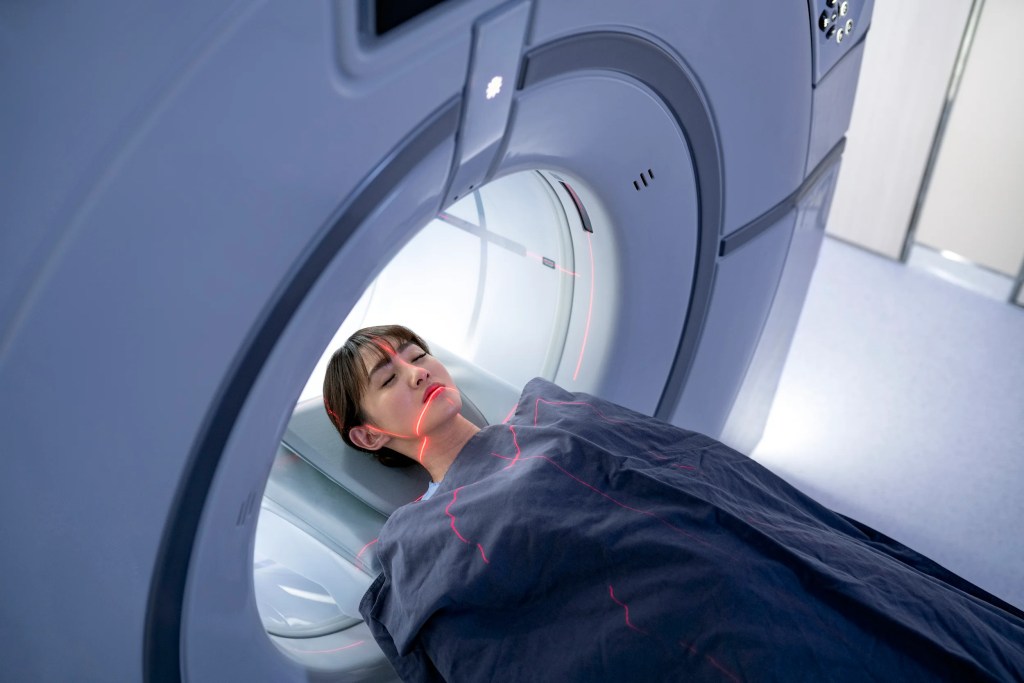
With that decision, the doctor set up my first MRI, which I had this morning. With a handful of MRIs under my belt, I felt like an old pro as I entered the radiology department. I removed all the metal from my body, donned a gown and climbed up onto the rolling bed that slid me inside the hulking machine. My eyes squeezed shut, I lay stock still, only moving to breathe, as the otherworldly cacophony of sounds dinged and rattled around me.
As I lay there, I wondered what it was seeing. What the contrast dye coursing through my veins would reveal.
After about a half-hour, it was over. I went to Lowe’s afterward to pick up a few things, and noticed my phone ringing as I walked into the store–my doctor’s office. I answered, and the woman on the other line said they’d received my scan results, but that the doctor was at the hospital today and wouldn’t be able to talk to me about the notes and next steps. Instantly, I felt as though the floor dropped out from under me. Notes?! Next steps?!
I composed myself long enough to pay for my items and leave the store, moving through the breathtakingly beautiful morning in a daze. My mind raced: chemo, surgery, radiation, death.
For most of the day, I spiraled, consulting Dr. Google and crying over the incredibly bleak survival rates of pancreatic cancer. How could this be happening again?
Suddenly my phone buzzed–an email from MyChart. My heart beating out of control, I logged in and saw my results were uploaded. I clicked the link and read the long list of findings. Pancreas, liver, gallbladder, spleen, stomach–they all looked normal. I felt like I’d just won the lottery.
But the report wasn’t totally good. The scan revealed some “nonspecific nodules” on the lower portion of my lungs. Of course, that freaked me out, too, but after some Googling, I found that lung nodules are fairly common and usually benign. I’ll have a CT scan to confirm (yay, more scanxiety!), but for right now, I’m holding onto that and trying to remain hopeful.
Today has been a reminder of the reality of life after cancer. Most days, I’m fine and not constantly freaking out over every little ache and pain like I did in the first year or so after completing treatment. Sometimes I even forget about cancer and feel like a normal person. But the fear is still there. And when it rears its ugly head, it still shocks me with its intensity.

 Strange Trip