Why Beyonce Made Me Cry

breastcancerwalk1

Every October, the hospital system in my city hosts a breast cancer walk/race to raise funds to provide mammograms to women who can’t afford them otherwise. It’s a worthy cause, and unlike a lot of breast cancer awareness events, it actually has a legitimate, worthwhile purpose.

In the years since my diagnosis, I’ve thought about participating in the event. The first year, I was just coming off treatment and still felt too sick to do it. Last year, I was working and this year, it was the same day as my son’s birthday party.

In my prep for the party, I went to a local restaurant to pick up a party tray. When I walked in, I was blown away by all the pink. Several large groups of participants from the event were enjoying a post-race meal in their pink t-shirts. A few of them bore the “survivor” shirts, and one was obviously still in active treatment.

As I stood waiting for my food, I felt a lump begin to rise in my throat. I started tearing up, and I bit my lip to keep it together until I got outside.

Once I got to the car, I let it go and cried. And as I was driving home, the song “Survivor” by Destiny’s Child randomly came on the radio. I sobbed even harder. And I sang along, an overwhelming feeling of anger and defiance pouring out of me with each word.

“I’m a survivor. I’m gonna make it. I’m gonna survive, keep on surviving.”

I’ve been backsliding a bit lately in my anxiety over recurrence and metastasis. My back has been bothering me quite a bit, and anytime I have persistent pain, it triggers a sense of panic that it might be something more nefarious than just pulled muscles or arthritis.

I was honestly surprised by my reaction yesterday. I didn’t expect to have such an emotional response. My tears surprised me, as did the anger that rose up with Beyonce’s words (Bey can get you in a mood to kick some ass, can’t she?). I’m obviously still feeling a little raw, even two years later.

I hope that one day I’ll feel strong enough to participate in the race. I want to help other women, and I really think it could be an empowering event. But I realized yesterday that maybe these conflicts that have kept me from participating are the universe’s way of saving me from a meltdown. I’m just not ready yet.
 

Eff Cancer

170915-anger-screaming-stock-njs-12p_b54ffc85cdc4c9170a757211f51069f2.fit-760w.jpg

As I mentioned in my last post, I’m in an online support group for women who’ve faced breast cancer. And in that group, one of the members was dealing with Stage IV metastatic breast cancer. Today I found out she passed away.

It’s so strange because this is a person I only knew from her posts in this group. We weren’t close. But every time she posted, my heart just ached. She was my age. She was a professional traveler, who’d zig-zagged around the globe, sharing her adventures online. From all I could infer through her words and photos, she was a vibrant, happy person.

And now she’s gone. She suffered at the end. I know this because she would vent her frustrations in our group–intense pain, swelling that made it nearly impossible to even get out of bed, debilitating fatigue.

Less than a year ago she was declared “cancer-free.” She completed her treatment. She did what she was supposed to do. And still, this shit came back. And it killed her.

Normally when I hear things like this, I am awash in grief and fear, but tonight I feel different. I’m angry. So fucking angry. If cancer were a person, I would strangle it with my bare hands right now. I would revel in squeezing the life out of it. I would laugh as it crumbled in my grip.

It’s so completely fucking unfair that this woman is gone. That so many women (and men) have been taken far too soon because of this stupid fucking disease. Not to mention all those who’ve somehow survived, yet live with the detritus that’s left behind after treatment, surgery and the mindfuck that is facing a potentially terminal illness.

I wish there was something I could do. Some way I could make this stop happening. I’m so tired of people dying needlessly. I’m so tired of worrying that I will join their ranks before I’m ready.

Fuck this disease. Fuck cancer.

Two Years

5dJbiCLTTu2GYEXU5V32_red calendar

Two years ago today I got the call that changed my life forever. Two years ago today I began a journey I never wanted to take. Two years ago I was diagnosed with breast cancer.

On this second “cancerversary,” I’m in a far better place than I was a year ago. I feel better. My hair is longer and more manageable. I’m not constantly gripped with anxiety.

My doctor’s appointments have tapered to once-a-year checks rather than monthly visits. I’ve grown accustomed to the side effects of Tamoxifen and menopause. I’ve settled into that “new normal” everyone kept telling me about.

I remember my oncologist telling me at one of my post-treatment appointments that there would come a time that I didn’t think about cancer every day. It would no longer be a major part of my life. At the time, that seemed inconceivable.

I still think about it every day, but it has become far less of a focus in my mind. I don’t obsess about it, constantly worrying that every little twinge or pain is recurrence or metastasis. I consult Dr. Google far less often, and I’m for the most part staying clear of the rabbit hole that is breast cancer message boards.

I haven’t forgotten, and I wouldn’t say I’m complacent, either–I don’t know that I could ever get to that point. But I am far less freaked out. And I’m much more focused on simply being healthy and living my life. My “new normal” is certainly different, but it’s sweetly normal, nonetheless.


Beautiful Broken Things

IMG_1268

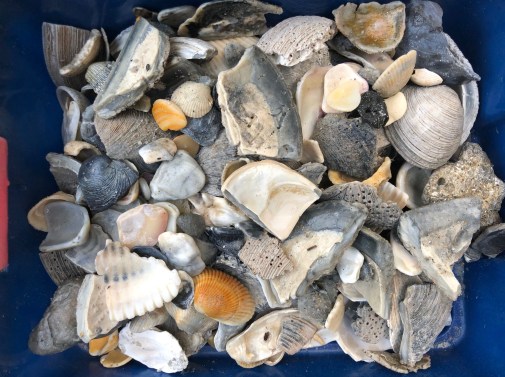
My boy’s shell haul

My three-year-old son loves picking up seashells. He combs the beach with laser precision, able to spot a treasure no matter how obscured or buried it may be. And he procures them with gusto, gleefully exclaiming, “here’s an awesome one!”

Last week we made our annual family trek to the beach, so pretty much every day, he and I trawled the shoreline looking for shells.

But after the first day or so, I began to notice something. While I searched for perfect specimens–symmetrical shells with no breaks or holes or other blemishes–my son was a bit less discriminating. Actually, it was like he was intentionally trying to pick up the gnarliest, most pitiful shells he could find.

“Look at this one,” I called to him, holding up a pristine white oyster shell.

He studied it for a second and then held up a broken piece of a similar shell, “But check this one out!”

At first, I would reply in the affirmative just to humor him, but after a while, I started to realize something. The shells he was choosing actually were awesome.

Yeah, they were broken or oddly shaped or full of holes. But they were interesting. Different. Weird. My bucket full of perfectly-shaped, flawless shells was pretty, but it was also boring. I could find the exact same assemblage inside a lamp at the beach house, or in a prepackaged bag at a gift shop.

Whereas his was filled with cool colors, textures and shapes–splashes of purple and amber, the juxtaposition of jagged edges alongside sea-smoothed curves, shells that looked more like moon rocks than sea life, riddled with hundreds of tiny holes.

These shells told a story. They hadn’t arrived on the shore in one piece. They’d lost their inhabitants. They’d been battered, beaten and carried who knows how far by the currents, rolled up and down the beach as storms and tides stirred them up from the sea floor.

As I watched my son marvel over these imperfect pieces, I began to see the beauty in broken things. The uneven, misshapen things. The not-quite-right things. The battered and scarred things.

We get so caught up searching for perfection–the right haircut, the perfectly-shaped breasts, the thin thighs, the flat stomachs, the smooth skin–that we miss the utter, distinctive beauty right in front of our asymmetrical faces.

Those imperfections tell our story–who we are, where we came from, what we’ve been through. They make us interesting. They make us individuals. And whether we choose to believe it or not, they make us beautiful.

Hide and Seek

1795894_10202533207125098_366213061_o

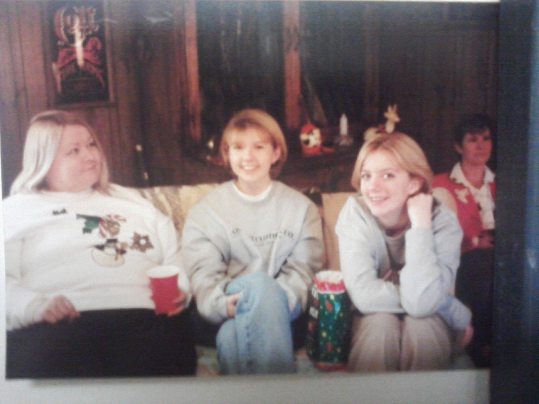
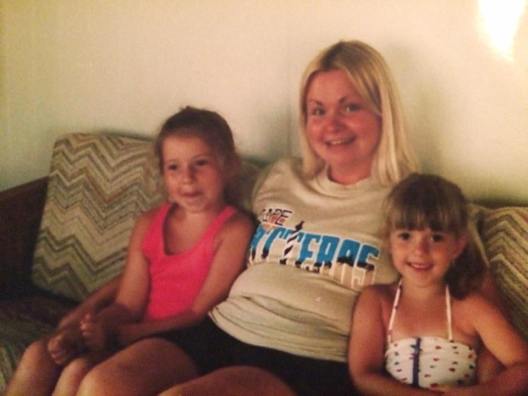
My mom, me and my sister

The other night, my son and I were snuggling in bed when he pointed to a photo hanging on the wall and asked “Mom, is that your mama?”

The photo–or photos, rather–hang in a collage frame my aunt and uncle gave me as a wedding gift. It was my favorite wedding gift, the only one that made me cry–a collection of images of my mother as a baby, teenager, on her wedding day, with us as kids, alongside similar images of me. A couple of the shots I’d never seen, making them the equivalent of long-lost treasure.

My son is only three, so questions about my mother make me a bit nervous because I’m not quite ready to explain the concept of death to him. I told him, “yes, that’s my mama,” and he replied, “I wish I could see her.” “I wish you could, too, baby,” I replied, trying my best to hold back tears.

Belonging to this terrible club I never wanted to join–children who’ve lost parents–is a game of hide and seek. Once you get past those first few years of grief–the all-consuming kind that can take your breath away–you find ways to live with the pain. To file it away in the back of your mind. To find a good hiding place where it can’t find you. Only, every now and then–usually without warning–it pops back up, and you grieve all over again.

My heart ached as I talked to my son about the grandmother he’ll never know. I hurt for how much I know she’d love and treasure him. I grieve the utter delight he would’ve brought her.

Holidays like Mother’s Day tend to dredge up these feelings for those of us missing our parents. We plaster on smiles and pretend everything’s fine, when deep inside, we’re hurting. Grief has found us again.

And while this holiday has gotten decidedly happier for me in recent years, it’s still bittersweet. As I revel in my own role of mother, I ache for the one not here.

To Be Young and Sick

5639bc863ca5485edb94ddf4631cb9f1

A couple weeks ago, I met with a dear friend for coffee and catching up. After running through the latest updates on work, school and family, we got down to the nitty-gritty. What’s really going on. How we feel.

After years of respiratory issues, she was recently diagnosed with a chronic lung condition. While such a diagnosis surely brought some sense of relief and validation, not to mention treatment that has her feeling more healthy than she has in a while, it also has left her with plenty of anxiety and sadness.

I can relate. And as she shared her experiences and feelings, I nodded my head in commiseration. Sure, our conditions were different, but we both shared a common (yet uncommon) experience–dealing with serious illness at a young age.

When I was diagnosed and in treatment, I had so many tell me how lucky I was to be so young and strong. Surely my youth would see me through this. And in a way, yeah, that’s right. My young, strong body certainly equipped me to handle chemotherapy and surgery and all the other trauma of treatment better than an old, frail person.

But didn’t that young, strong body also fail me? Didn’t it betray me? Didn’t it allow me to be very sick and face my own mortality far too soon?

My friend and I shared our grief over losing trust in our bodies. It’s something a lot of people experience, but it wasn’t supposed to happen to us. Not now, at least, when we’re both still in what’s supposed to be the prime of our lives.

We also talked about the utter loneliness of being seriously ill at a young age. My friend related her experiences at the pulmonary clinic, surrounded by patients decades her senior. I knew exactly what she meant having experienced the same thing at the cancer center. While your peer group is doing totally normal things like having babies, traveling, advancing in their careers, you’re in a cycle of doctor’s appointments, trips to the pharmacy and hospital stays.

People your age can be sympathetic and kind, but they truly can’t understand how it feels to be thrust into this world of constant medical attention.

Then there’s the fear and anxiety. Being diagnosed with a serious illness at a young age casts a shadow over your life. Sure, you may be treated and be just fine. You may have clear scans and NED (no evidence of disease). But there’s always that fear lurking in the shadows that it’s going to come back. Or get worse. That the treatments that worked will fail. That the medication no longer does its job.

And when something like this happens to you at a young age, that fear seems almost amplified simply because you’ve got so much life ahead of you. There’s so much time for something to go wrong. You’ve seen the boogeyman, and you just know he’s waiting for you, but you don’t know which corner he lurks behind.

There’s never a good time to face serious illness. But to be young and sick seems especially cruel. Even if you recover (which some do not, an almost unfathomable truth), so much detritus still remains, so much is left to be dealt with. Figuring out the illness is but a first step on a long journey.

Eighteen

DETA-72

The strangest thing happened today.

It’s Easter, so we rose relatively early this morning to see if the bunny visited our house last night (he did). We enjoyed a leisurely breakfast. We played outside in the balmy spring sun with my son’s new Easter goodies.

It wasn’t until late in the morning when I checked Facebook on my phone that it hit me–today is April 1.

12472449_10154098880459314_2015776637288938079_n

This photo showed up in my feed via the “On This Day” feature. Of course, I shared this two years ago today. It’s April 1, the day my mom died.

For the last 17 years, I’ve dreaded this day. This box on the calendar, with its power to transport me to the past, to the single worst day of my life (yes, even trumping the day of my diagnosis). This date that changed my life and my family forever.

But this morning, I spent hours blissfully unaware. I blame the fact that Easter fell on April 1 this year, providing a happy distraction. For a few moments, it felt like just another day, and not a reminder of what I’ve lost.

I think this would make my mother happy. I think she’d smile seeing me play with my son, enjoying every moment of his joy over his Easter basket, and my elation at being able to provide that joy.

I think she’d be thrilled to see me spending part of this day at my in-laws’ house, sitting in the sun with my mother-in-law, who loves me like one of her own. I think it would do her heart good to know that I have these incredible people–who’ve welcomed not only me, but my entire family into theirs–in my life.

Briefly forgetting what today is doesn’t say anything about my grief or how much I still miss my mother. What it does remind me is how incredibly blessed I am to have this family and this life that can produce enough joy to, even if momentarily, blot out the searing pain of her loss. I think that’s something that would make her very happy, indeed.

Graduation Day

how-to-spend-graduation-money.jpg

Today I had my six-month follow-up with my oncologist. This is my regular check-in with him that includes blood work and a physical exam.

While these appointments are routine, they kick my anxiety in high gear. My oncologist is very busy, so I always end up nervously playing solitaire on my phone while waiting on him to come into the exam room. Those minutes tick by very slowly–all the bad news scenarios race through my mind, and I have flashbacks of sitting in that room during my first appointment after diagnosis. I think about how hard his job is. While there’s certainly the high of literally saving people’s lives on a regular basis, he’s also the bearer of really bad news on more occasions than I’d like to imagine. It must be tough.

But today’s visit was a good one for both of us. He let me know my blood work looked great, and when I brought up the ongoing back/hip pain I’ve been experiencing for the past few months, he said arthritis or perhaps some degenerative disc pain was the likely culprit, but ordered an x-ray just to be on the safe side. While an arthritic hip would mean I’m just an AARP discount away from full-on old ladyhood, I’m really hoping that’s the problem.

As we wrapped things up, he told me I could start seeing him on a yearly basis. This is a big deal. I’ve graduated from every two weeks to every couple months to every six months, and now, just once a year. My schedule no longer revolves around cancer. My doctor’s appointments no longer fill my calendar. I feel so very…normal.

As I drove home, I had a little talk with myself. I have a bad habit of waiting for the other shoe to drop. Since my diagnosis, I’ve felt like bad news was around every corner. I’ve had some scares and disappointments, but for the most part, things turned out pretty damn well for me.

Yet the nervous Nelly inside me can’t help worrying that something bad is going to happen. The cancer will return. It will spread. I will die. I won’t be here to raise my son. This is is the fear I live with every single day.

But I realized today that I can’t keep living like this. Just like I came to terms with my diagnosis, I need to come to terms with the fact that I’m OK. Right now, I’m OK. I can’t control the future, and worrying about it isn’t going to prevent anything bad from happening.

So, that’s where I am now. I’m going to focus on living one day at a time, and today happens to be a very good day.

A Year of Growth

0555bbe9368a05bff51437bdc1ff702e_XL

The other day I logged into Facebook and was greeted with a blast from the past via their “On This Day” feature. It was a photo from last January’s Las Vegas Market, my first work trip since my cancer diagnosis.

That trip felt a bit like a coming out party. I’d been off the road for nearly six months, and I was completely changed, inside and out.

Particularly out. At that point, my hair was just growing back in, and I’d decided to dye it red for a change of pace. I had a funky new pair of glasses, and I was trying to figure out how to feel comfortable in my skin again after the world-rocking experience of cancer, chemotherapy and mastectomy.

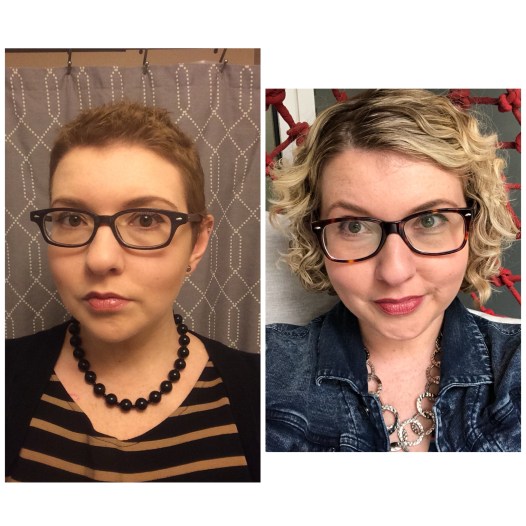
Looking at that photo, I couldn’t help thinking how here a year later, I once again look completely different. I did a side-by-side comparison for you–these photos were taken almost exactly a year apart, to the day.

IMG_0093

2017 vs. 2018

I can’t help noticing more about the photo on the left than just my hair. There’s a sadness in my eyes in that first shot, and a feeling of trepidation. I look like I want to smile, but just can’t quite bring myself to do it. I’m still too tired, still too fearful, still too worn to even fake joy.

And here I am today on the right. There’s a smirk, but not a full smile. I’m not quite there yet. My hair is wild, curly and blonde. The latter feels like the me I was before all this, but those wild curls seem to represent how I feel about my life now. One of my favorite sayings is: “You can’t control everything–your hair was put on your head to remind you of that.” Ain’t it the truth?!

I have a new appreciation for relinquishing control. Or accepting that I cannot control everything, and that’s OK. Are there days that living that truth is hard? Hell yes. But it’s an important lesson to learn, and even though I hate the way I was taught it, I’m glad for the knowledge nonetheless.

This last year has been one of growth for me on so many fronts. From my hair to my health to my emotional well-being, I’m in a better place than I was in January 2017. And while I still have plenty of growing to do (particularly on that hair front!), I’m happy with what I’ve accomplished thus far. Growth is hard, but growth is so good.


Awkward Conversations

One of the things people never really warn you about with a cancer diagnosis are the awkward conversations.

There’s the unpleasant business of telling your family, friends and co-workers. There are the “how are you feeling” questions that during chemo you want to answer, “like a steaming pile of shit just flattened by a tank.” But you don’t because you’re Southern and too polite for your own good. There are the conversations with your oncologist about how menopause is affecting your sex life. SO much awkward.

And the thing is, they don’t end with the conclusion of treatment.

This week, I went to a conference for work. I saw lots of people from the industry I cover who’ve seen me go from a long-haired blonde to a pixie-cut redhead to the blonde, curly mop I’m sporting now.

Because I never made any sort of public announcement about my cancer (because that would have been super-awkward), most of them have no idea what I’ve been through or why my hair has changed so drastically.

One sweet gal remarked how much she loved seeing all the hairstyle changes over the past year. She was genuinely complimenting me, so I just smiled. But inside? So awkward.

Another time, a colleague from a previous job who now works for one of the furniture companies I write about remarked on my short, curly hair. “Is it naturally curly?” She asked, having always known me to have straight hair. “No,” I responded. Later I laughed, realizing she probably thought I’d cut my hair off and permed what was left. She probably thought I’d lost my mind!

I could’ve just told these people the truth. I didn’t cut my hair; it fell out. And when it finally grew back, it was curly. Because of chemo. Because I had cancer.

But like I’ve said before, that’s a giant turd to drop on someone. It stops the conversation. It changes the tone. It makes people feel…awkward.

Just like I’ve learned to talk around my dead mom when new people ask about my family, I’m learning to talk around my cancer. Not out of shame or anything like that, but just to make things easier. When things have been so hard, a little ease is worth any internal awkwardness I may feel.