Re-entering the World

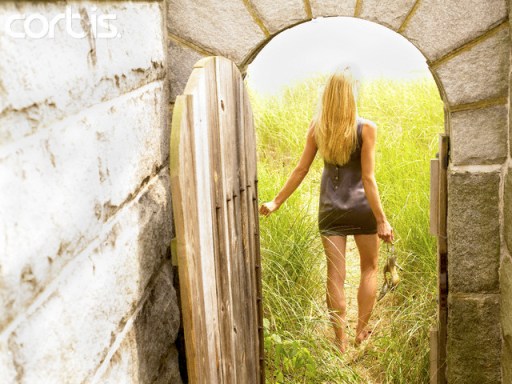
Woman Walking Through Door into Meadow

This past weekend, I had my 20-year high school reunion. I’m one of those weirdos who actually enjoyed high school (at least, as much as a person can), and I’ve even stayed friends with a core group from those days.


At points when we should’ve gone our separate ways, life has thrown curve balls that brought us back together. Our freshman year of college, a dear friend’s younger brother died in a car accident. My mom passed similarly in the middle of our college years, and several other friends lost parents or close loved ones in the couple of years following college graduation. We all rallied around one another in those times of strife, drying tears, offering shoulders to lean on and laughs to help dull the pain.

And from there we continued to see each other–weddings and all the accompanying hoopla turned into baby showers and christenings. Sure, sometimes years will pass before we see each other, but we’re the type of friends who can get together and it feels like no time has elapsed since our last meeting. We just pick right up where we left off.

As I danced and laughed and reminisced with them this past weekend, I experienced that strange feeling of being back with a group that was my world for a time, even though they no longer hold that status in my life. It’s strange to return to a place/group of people you once thought of as a sort of home when that’s no longer your day-to-day neighborhood.

I had this same sensation last week at the cancer center. For so much of this past year, that place has felt oddly like home to me. Its inhabitants–the doctors, nurses, staffers and fellow patients–they were my people. Just like my high school friends, they get me in a way few do. They understand a very important time in my life the way no one else really can.

But as I sat in the waiting room, my mass of chemo curls spilling around a headband’s tenuous grasp, I began to realize I no longer belong there the way I once did. And as my oncologist went over my whistle-clean lab work and told me I was going to be just fine, I felt this even more acutely. I don’t look sick. I don’t feel sick. I’m not sick.

And just like that guy who graduated five years ago and still hangs out at high school parties, I need to move on. I need to re-enter the world. I need to take cancer patient off my list.

My high school experience is a big piece of who I am, and those friends will always be a part of my life. Same thing with cancer. This disease has changed who I am. There will never be a time that I don’t return to this place, never be a time that it’s not part of my life. Just as my adolescent years helped shape me, so has my bout with this disease.

I don’t want to go back to high school or my teen years, and I don’t want to go back to being a full-time patient. But knowing those who were there for me during both those times will be there for me now, and in the future if I need them, is a great comfort.
Down the Rabbit Hole

Capture

My back hurts.

It’s a pretty minor pain, to be honest. I’ve had issues with my back much of my adult life (another hereditary thing, I’m certain, since my mother and sister both suffered/suffer back issues), and I’ve had backaches much worse than this. Plus, I’m coming off several major surgeries to my torso, I’m on Tamoxifen, I’m going through menopause, and I lift a 30-pound toddler on a daily basis. Of course my back hurts.

But that rational explanation can’t quite quell my fear. Even the smallest twinge of pain conjures that insidious little voice in my head, whispering, “maybe it’s cancer.”

On a good day, I tell that little voice to fuck off, pop an ibuprofen and keep it moving.

But on bad days, I turn to the place I should probably avoid most–the internet.

It all starts with Dr. Google. After I’ve Googled symptoms, I’m usually still unsatisfied. That’s when I go to a place I definitely should avoid.

The community message boards on breastcancer.org are actually a really great resource. Women and men at all stages of the game can talk to each other, share stories, ask questions, offer support–it’s truly a fabulous space.

It’s also a dangerous place for a person like me. I usually start by scrolling through the topics, but when I can’t find threads addressing my particular issue, I do more targeted searches. These searches bring up threads that are years old, full of people experiencing symptoms and fear similar to my own.

As I scroll through these threads, I can’t help but notice something that makes my heart sink. Members of the message board all add a signature to their posts that lists their diagnosis(es), treatments, etc. Most of them started out with early-stage cancer. There are folks whose cancers are hormone-receptive (like me), folks with no lymph node involvement (same), folks who seemingly should’ve been done with this mess after the first go-round. Their stat lists also include things like “Stage IV,” “bone mets,” “lung mets,” “liver mets,” “brain mets.” (Mets is shorthand for metastasis.)

When you see words like that on a post that’s several years old, you can pretty much draw some solid conclusions as to what has happened to those people in the interim.

In Nina Riggs’ brilliant memoir The Bright Hour, she talks about this online medical obsessing in the essay perfectly titled: “www.heyninariggseverythingisgoingtobeok.com”:

A couple years back, when a therapist helped me realize through a series of exercises that the only thing that would satisfy me on the internet was a website that explicitly said: “Freddy and Benny are going to be just fine. So are you and John.” I laughed out loud at myself. But it didn’t really stop me from seeing disaster at every corner, or checking from time to time to make sure the magical website did not in fact exist.

Yep, that’s what I need. I’m looking for some validation that what I’m feeling is no big deal. A little reassurance that it’s nothing, and I should stop freaking out all the time. I know this is nuts. I know there is nothing on the internet (or anywhere else, for that matter), that is going to give me this reassurance. And even if it did, would I believe it?

The thing is, coping with all of this calls for a healthy dose of faith. I certainly have a strong faith, and while turning my fate over to God and my oncologists is freeing in a way, it’s also terrifying. Just like riding on a plane, I no longer have control, and I think that’s what scares me most.


On Pause

These-Super-Easy-Tweaks-Will-Make-Exercising-In-The-Heat-Less-Miserable

So, since my preventative oophorectomy back in May, I’ve been in full-on menopause. This is a super-fun condition to be in during August in the South.

I’ve actually been in a menopausal state for more than a year now, since chemo sent me into a chemically-induced menopause last year. But with that, I didn’t really get the full symptoms that I’m experiencing now–hot flashes, night sweats, mood swings, weight gain.

Physical symptoms aside, being menopausal at 38 is a peculiar thing. While the rest of my peer group is still far from this stage of life (some are even still having children), I’m swapping complaints and cooling strategies with women 15 years my senior.

It’s sort of like having breast cancer (or cancer in general) at a young age. It feels very lonely because most of your friends have no idea what it’s like or what you’re going through. And if they can relate, it’s likely because one of their parents has dealt with the disease.

Looking around the cancer center, I’m usually one of the youngest people in the waiting room. And a lot of the older patients look at me either with bewilderment or pity. I often see eyes quickly dart from my face to my wrist–seeing my patient bracelet confirming, yes, I have cancer, too.

I think this is one of the hardest things that no one talks about when it comes to being a young survivor–the sense of loneliness and feeling sort of out of place in your own life. As much as my friends and loved ones are here for me, they really don’t know how this all feels, physically or emotionally. I’m still me, but I’m very different now and my view of the world has changed dramatically.

I think that’s why so many of us manage to find each other online, and why groups like the Young Survival Coalition are so important. Sometimes it’s just nice to commiserate with someone who completely understands. I have found some of that in this last year, but I’m still looking for my “tribe,” as the kids say these days.

In the meantime, I’ll be over here sweating it out, anxiously awaiting fall.

Deja Vu

iphone_apps

The other day, I read an article about a new app produced by the Duke University Cancer Center. The app is for cancer survivors who are having a hard time coping post-treatment. It offers meditation exercises, stress relief techniques and other resources for those who are struggling mentally with the debris of post-cancer life.

Of course, I downloaded it immediately. Upon opening it, I discovered the app is part of a study the school is conducting to help provide better support resources for cancer patients.

As I scrolled through the app answering questions for the study, one of the queries really struck me: Do you find yourself reliving or going back to your treatment?

Today I had surgery again. It was a small revision procedure to fix a wonky place in my reconstruction (yeah, let me dispel any notions that reconstruction is anything akin to having a boob job).

It was my fourth surgery in a year, so it all felt very familiar–the litany of pre-op questions, the antibacterial wipe scrub-down, climbing onto the table in the freezing cold operating room with the blindingly-bright lights in my eyes. Even one of the nurses remembered me from my previous visits.

Oddly enough, today also is the one-year anniversary of my first chemo treatment. The routine of having surgery today conjured up many of the feelings I had that day a year ago. Nervousness over the procedure. Anxiety about how I’d feel after. Squeamish over the needles and blood and pain. Just like this day last year, I’m curled up under a blanket, taking meds, trying to feel better.

And here’s where that question from the app really resonates: Do you find yourself reliving or going back to your treatment?

Trying to eat today has been difficult. Not because of my surgery, but because I keep thinking about how I felt that day after chemo. Just thinking about it almost makes me nauseous. Even this past week as I took my usual walks around the neighborhood, the uneasy feeling in my stomach would return as I remembered taking walks after chemo, trying to power through the side effects of both the chemo and the steroids I took after, in an attempt to take advantage of the benefits of fresh air and exercise.

Everything seems to remind me of that time. The stifling August heat, the way the light looks in the afternoon, the scent of soap I used at the time.

Part of the Duke app study is an attempt to identify the occurrence of post-traumatic stress disorder (PTSD) in cancer survivors. This is something a lot of people don’t talk about or understand. The wreckage after cancer treatment.

Survivors are celebrated, congratulated. “You did it!” “You beat it!” “You can get back to normal now!” While everyone around you smiles and breathes a sigh of relief, you’re still a mess. Afraid of recurrence/metastasis. Dealing with the lingering effects of chemo and surgery (effects that can last for years). Coming to terms with a new, often disfigured body. Being haunted by memories and dreams of the trauma you’ve endured.

I really hope my responses to the study can help Duke gain more insight into the issues that cancer survivors face. Life after cancer is good–truly a gift. But it’s also hard. And if we can figure out new ways to help patients cope, that’s a very good thing.


A Letter to My Fear

9-fears-facing

This morning I had my first appointment with a counselor at the cancer center. Our session was mostly paperwork and getting-to-know-you questions, but toward the end, she asked me what tools I’m currently using to cope with my emotions in the wake of my diagnosis and treatment.

I told her about this blog and other writing I do, and before I left, she encouraged me to use some writing exercises to help work through all the feelings I’m experiencing now. One of her suggestions was to write a letter to my fear and/or my cancer. It sounds kind of hokey, but I’m going to give it a shot, starting with fear. Here goes.

Fear,

I won’t use the salutation “dear,” as you are no more dear to me than a smear of shit on the bottom of my shoe. You are no friend of mine. You are the enemy. You live to undermine me. To torture me. To keep me cowering in the dark, unable to make a move without worry or anxiety.

You’ve always been around. Even before cancer, you’d rear your ugly head before big presentations, on airplanes and even on days that should have been nothing but happy, like my wedding or the day my son was born.

But now, you’re especially vicious. You’re around every corner, it seems. No longer content to just lurk in the shadows, you parade around in the bright light of day, emboldened and relentless. You don’t care if I’m at work, at home, in the middle of something important or joyous. Like the unwelcome guest that you are, you horn in on good moments, popping up in places you don’t belong. You rob me of sleep, of solitude, of peace.

You drive me to Google symptoms over and over again. Pelvic pain. Back pain. Neck pain. Every little twinge sends me into a frenzy. The old me would chalk it up to sleeping wrong, exercising too hard or eating too much rich food. I’d pop an Advil or antacid and keep on moving. But with you on my shoulder, such nonchalance is impossible. Nothing is brushed off. There’s no such thing as just a little ache. Everything must be over-analyzed, scrutinized, fretted over. Every little feeling could be the beginning of impending doom when you take over my brain.

And here’s the thing–I don’t know how to shake you. I know my good buddy time will help me, but he takes his…well…time to do that. So what am I to do until then? Just put up with you? Allow you to control me? Allow you to make my life hell?

And if we’re being truthful here, even time won’t banish you from my life completely. You’ll always be there in some way, lurking around along the edges, just waiting for the opportunity to strike. You can smell my vulnerability like blood in the water–you know all my soft spots and when I’m at my weakest. No predator has ever stalked his prey with more deft cunning than you.

My only course of action is to face you. To call you out. To tell you to fuck off. To allow the rational side of my brain to tamp down the irrational, obsessive side more often. I know this will not be easy. This is going to be a bloody, brutal fight between you and me. But I’m ready. I’ve fought scarier, more dangerous opponents than you. Ask them how that went. I have reinforcements, and my team is stronger than yours. Let’s do this.

Until next time,

Jennifer

On Shoes Dropping

the_other_shoe_to_drop_waiting

Last fall when I was really sick after my first dose of Taxol, my dear friend Carla sent me an incredible book to help wile away the hours of headaches, fever and worry.

The book was “In the Body of the World,” a memoir by Eve Ensler, the writer and activist best known for creating “The Vagina Monologues.” It details her fight with uterine cancer, while giving a healthy dose of perspective in the form of harrowing tales of the horrifically abused women she advocates for in the Congo.

While I related to her words and experiences on so many levels, one point she made really resonated with me above all others. Ensler talks about her cancer diagnosis and dealing with the feelings of “why me?” She explains that having survived sexual abuse at the hands of her father, as well as abusive relationships with other men, she sort of felt like she’d been through her really bad thing. And now, even though she’d already been through hell, she was being put through it again.

Yes! I know it’s unrealistic, but after my mom died, I sort of felt like I’d paid my heartache dues. Sure, I knew there were plenty of bad things that could and would happen to me, but I felt like maybe I’d earned a pass to not have to experience anything really catastrophic for a while.

As Ensler and I both learned, unfortunately, life doesn’t work that way. Bad things happen to good people. Bad things happen to people who’ve already been through more than their fair share of bad things. Bad things happen on top of other bad things. Bad things don’t have a rhyme or reason. There’s no real pattern. And that’s what makes them so damn scary.

As I walk this path of survivorship, it’s hard for me to keep the fear at bay knowing this truth. There are no free passes. This shit could come back. It could come back today, next week, next year. There’s no guarantee.

I made a therapy appointment today. As I wrestle with all these feelings, I know this is the right move for me. Thankfully, the cancer center has counselors on staff to help people like me make sense of all this and try to move on with our lives. I’m excited to take the first step.


Survivor’s Guilt

nature-sunset-flowers-silhouette

This morning I had my survivorship appointment at the cancer center. This is a next step in my cancer journey–addressing what I need physically and mentally after treatment.

One of the things that I’ve come to realize is most overlooked/not talked about when it comes to cancer is what happens to a person after they complete treatment. When you’re in the throes of the battle, as strange as it sounds, things are almost easier in a way. You have a focus, you have a plan, and you’re really sort of forced to take things one day at a time–handling that day’s treatment, side effects, etc. There’s a routine of appointments, blood draws, check in, check out.

But then everything sort of stops. Appointments taper from weekly to monthly to every couple of months. Your arm stops feeling like a pin cushion (that I don’t mind so much). Your hair grows back (that I definitely don’t mind). Suddenly the routine changes, and you’re supposed to go back to your normal schedule.

Except, nothing feels normal anymore. Even as I go to work, take care of my son, carry on with my regular activities, things are no longer the same. There’s a new sense of fear, anxiety and even guilt.

I’m feeling the latter more acutely this week. On Sunday, Nina Riggs died of metastatic breast cancer. She was only 39. I’ve been following Nina’s story since last fall when her incredible essay about living with terminal cancer ran in The New York Times‘ Modern Love column. Nina’s story resonated with me in so many ways–as a breast cancer patient, as a mother of a young boy, as a wife, as a woman who lost her mother too soon. We had a lot of things in common–we even lived in the same city and had some mutual friends of friends. I wrote about Nina’s essay in this blog, and she was even kind enough to comment and send good wishes my way.

I’ve cried so much this past week for Nina and her family, her two boys in particular. Though I didn’t really know her, I got to know her through her writing and I could empathize with many of the things she experienced during her fight with cancer. I know how hard it was for her as a mom to know she’d have to leave those boys. My heart aches for her in that regard, and for them as  children who lost their mother too soon.

Even more bittersweet is the fact that Nina has a memoir called The Bright Hour coming out in June, chronicling her experience living with metastatic breast cancer. She wasn’t able to live to see its official release. But I hope it will allow more people to not only get to know her great talent, but also shine a light on a type of cancer that is generally kept in the shadows. Nobody wants to talk about metastatic breast cancer because it’s usually not a happy story to tell. But the fact is there are thousands of women and men who face and live with this diagnosis every year. And their stories are important, and I’m glad at least one of them is going to be told in such a public way.

As I wrapped up my appointment this morning, the NP I met with gave me a hug and congratulated me on reaching this point. I know I should be feeling celebratory–and I do in a way–but it’s hard to totally let my guard down and enjoy this moment. It’s a process, and I have a lot of work to go, and I plan on seeking some help to get there. In the meantime, I’m just focusing on feeling grateful. I know how fortunate I am to be where I am, and that’s enough to get me through today.


Smoke and Mirrors

index_3

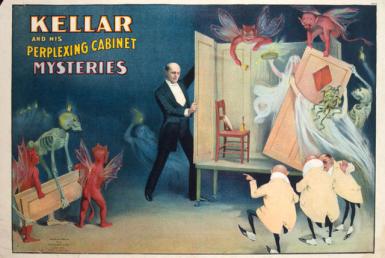
Searching “vintage magic” to find this image was super-fun. 

In the past month or so, I’ve gotten a lot of compliments. Some of them are on my hair (the chemo curls are coming on with a vengeance) or how healthy I look. But most of them go something like this:

“You are just so strong. There’s no way I could have managed all this.”

“You are holding up so well; I would be  a mess if this had happened to me.”

You get the picture. But the truth is not very inspiring.

Inside, I’m a complete mess. Truly. I just do a good job of hiding it.

This same thing happened 17 years ago when my mom died. I was so composed (at least publicly) throughout the months following her death that I actually had two friends take me aside to tell me they were worried I was in shock and on the verge of a breakdown or something. Little did they know I’d cried a river of tears almost every day, just behind closed doors.

My people are a stoic bunch. I’ve seen/heard my dad cry exactly four times (three after my mom’s death, the other after his beloved dog died). I don’t think I ever witnessed my grandmother shed a tear, despite burying her husband and two children, as well as several grandchildren. Tough as nails. But it’s not that we don’t feel these emotions–we just rarely express them publicly. (I’m sure this is a conversation to have with a therapist one day.)

The truth is, I still cry often. In the car. At night after everyone’s asleep. Holding my baby in my arms in the dark as he dozes off. Even sometimes after doctor’s appointments.

And if you could see my Google search history, well, you’d know what an overly-paranoid freak show I’ve become. I consult Dr. Google on a nearly daily basis. Every little pain or twinge could be something in my mind. I read symptom lists. I read message boards and blogs, looking for people who felt the same things I do but were OK. It’s totally unhealthy, yet I can’t stop.

So, yeah, I look like I’ve got it all together. But don’t be fooled–I’m still a mess inside.